
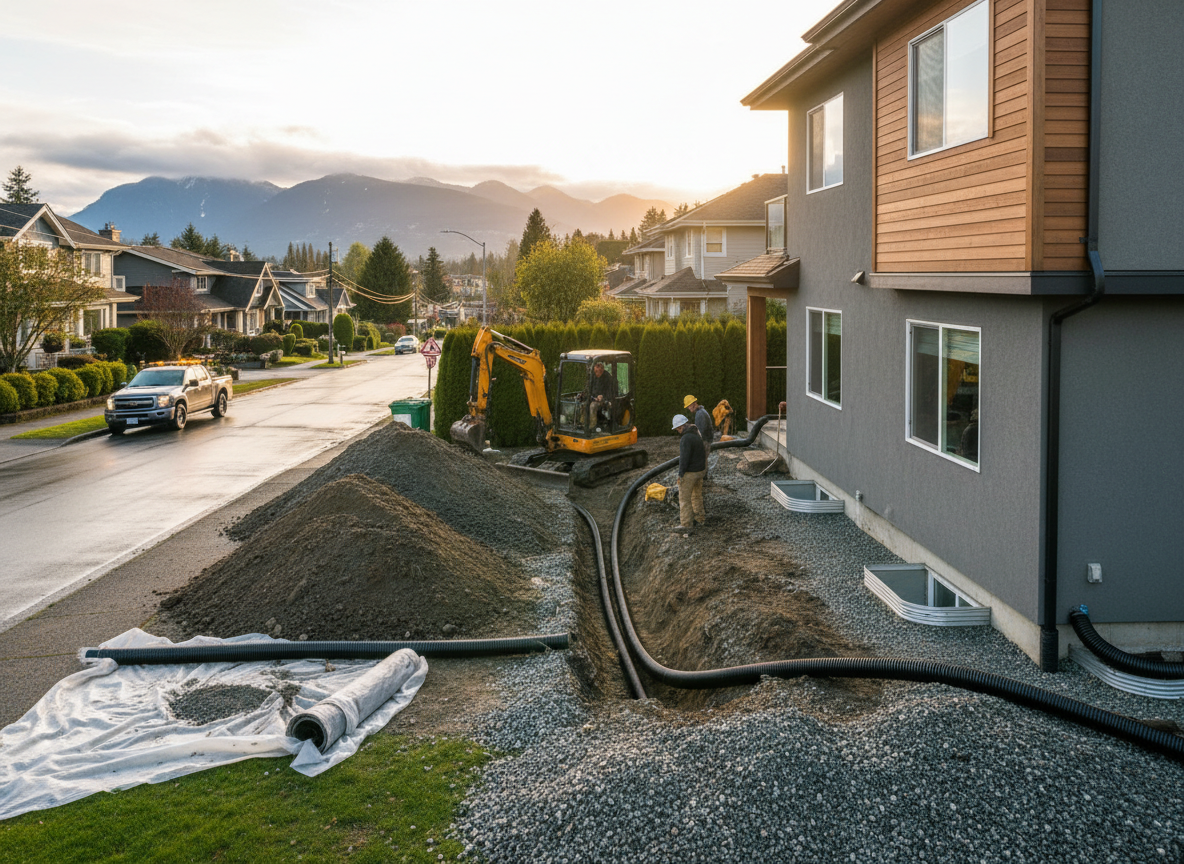
The cheapest water to deal with is the water that never reaches the foundation. Rain falls on the roof, runs off paving and slopes, and soaks into the soil beside the house. In Vancouver, where roughly 42 inches fall in an average year, mostly from late fall through winter, that adds up. Exterior drainage is about controlling where that water goes, and it is often the first and most effective step in solving a wet basement or crawl space.
The parts of an exterior drainage system
- Grading: the ground should slope away from the house. A common rule of thumb is a drop of about 6 inches over the first 10 feet, though site conditions vary
- Gutters and downspouts: gutters need to be clear and sized for the roof, and downspouts must discharge well away from the foundation
- Downspout extensions and underground pipes: carry roof water away instead of letting it pool beside the wall
- French drains and perimeter drains: a gravel-filled trench with a perforated pipe that collects water and carries it to a discharge point
- Catch basins and surface drains: collect water from low spots, patios and driveways
- Window well drainage: keeps water from collecting against basement windows
Where the water goes
Collected water has to go somewhere suitable: away from your foundation, not onto a neighbor's property, and not across a walkway or street in a way that creates problems. Local stormwater rules and the site decide what is possible, which is why the discharge is planned as part of the design and not added afterward.
Why exterior drainage matters for interior problems
Many damp basements and crawl spaces are made worse by water pooling outside. Fixing gutters, extending downspouts and correcting grading are inexpensive compared with interior systems, and they reduce the load on any sump pump you have. If water still enters after exterior drainage has been fixed, the problem is groundwater or a leak, which needs a different answer.
Signs your property needs drainage work
- Water pooling beside the foundation after rain
- Downspouts that empty right next to the wall
- Ground that slopes toward the house
- Gutters that overflow, sag or are full of debris
- Soil erosion, or mulch and soil washing against the foundation
- A damp basement or crawl space after storms
Timing
Excavation and grading are easiest when the ground is dry. In Vancouver, July and August are the driest months, so late summer is a good time for outside drainage work, ahead of the wet season. Smaller fixes, like downspout extensions and gutter cleaning, can be done any time.
Related services, guides and areas
- Often combined with: basement waterproofing, crawl space waterproofing and sump pump installation
- Guides: soil, groundwater and drainage near the Columbia River and signs of moisture problems after heavy rain
- Where we work: Hazel Dell, Orchards, Felida, Uptown Village and Downtown Vancouver
Water pooling near your foundation? Contact us and describe what you see.
Exterior Drainage Systems Services We Offer
✓Grading Corrections
Reshaping the ground so water runs away from the foundation and not toward it.
✓Gutter and Downspout Solutions
Gutter repair or replacement, downspout extensions and underground drain pipes that carry roof water away.
✓French and Perimeter Drains
A gravel trench and perforated pipe that collects groundwater and surface water and carries it to a discharge point.
✓Catch Basins and Surface Drains
Collect water from low spots, patios and driveways and route it away.
✓Window Well Drainage
Drainage at window wells so water does not collect against basement windows.
Exterior Drainage Systems Cost in Vancouver, WA
| Service | Typical Range | What Affects It |
|---|---|---|
| Downspout extensions and underground pipes | Call for an estimate | Depends on the number of downspouts and the distance to the discharge. |
| Grading corrections | Call for an estimate | Depends on the area and the amount of soil to be moved. |
| French or perimeter drain | Call for an estimate | Depends on length, depth, access and the discharge route. |
| Catch basins and surface drains | Call for an estimate | Depends on the number of basins and the piping needed. |
Ranges are typical for Vancouver, WA and confirmed with an exact written quote before any work starts.
How it works
- 1
Site review
We walk the property, looking at roof runoff, grading, gutters, downspouts and where water pools.
- 2
Planning the drainage
We plan how water will be collected and where it will discharge, including any rules that apply.
- 3
Installation
We carry out the grading, drainage and piping as agreed.
- 4
Testing
We check that water flows to the discharge point and does not collect beside the foundation.
Pricing
Cost depends on the size of the property, the amount of excavation, the length of piping and the discharge route. We give an estimate once we have seen the site.