
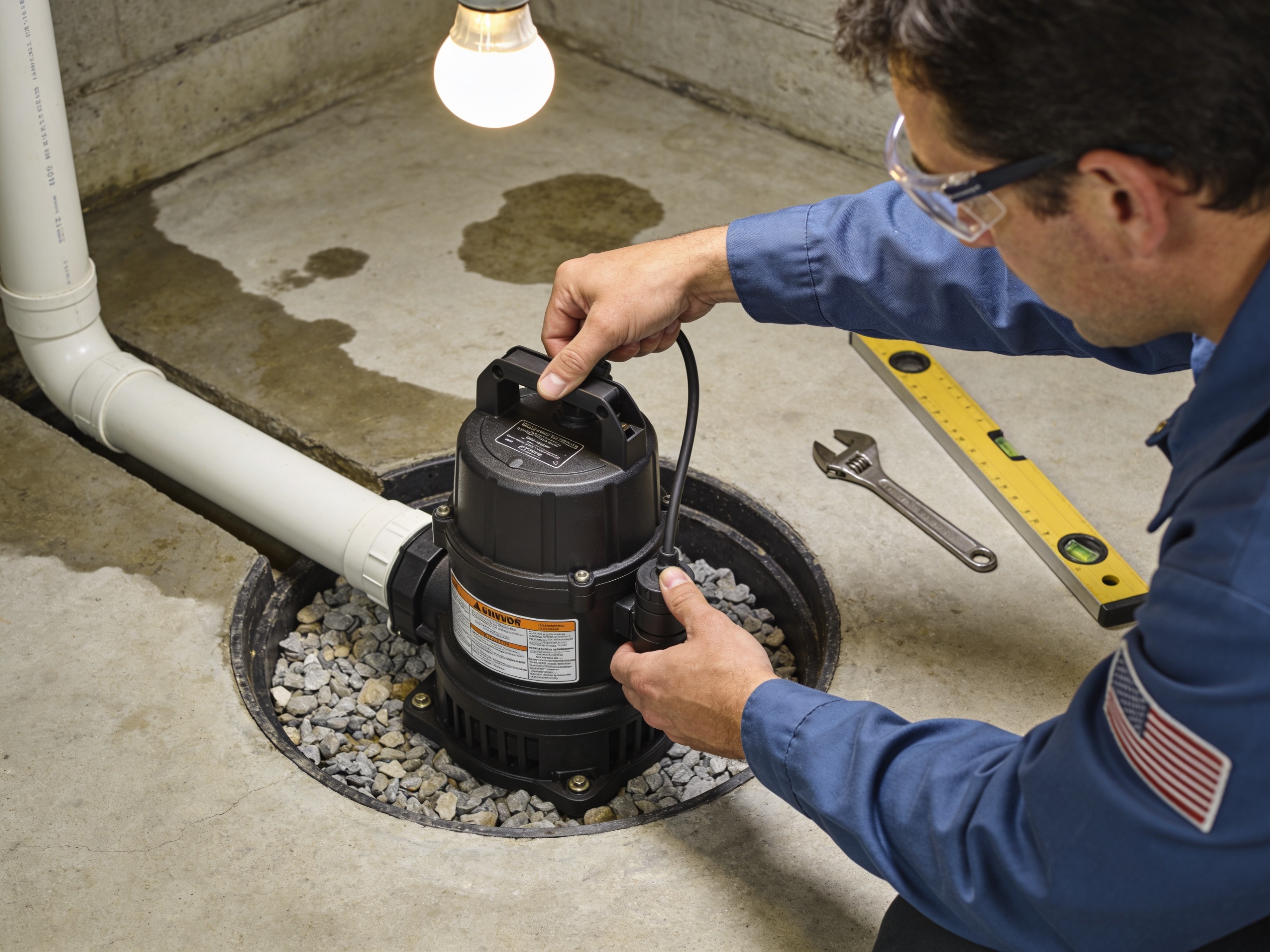
A sump pump is a pump set in a pit below the lowest floor, or in a low point of a crawl space. Water from drains around or under the foundation flows into the pit, and when the level rises, the pump switches on and sends the water out through a discharge pipe. It is the part of a waterproofing system that gets the water out of the house. In a region where most of the year's roughly 42 inches of rain falls from late fall through winter, a pump can run often for months.
What a sump system includes
- A sump pit sized for the water coming in
- A pump matched to the volume of water and the height it has to be lifted
- A check valve so water does not run back into the pit when the pump stops
- A discharge line carrying water away from the foundation to a suitable place
- A float switch or other control that starts and stops the pump
- An optional battery backup so the pump keeps working during a power outage, which can happen during storms
Where the water goes
The discharge matters as much as the pump. Water should be sent far enough from the foundation that it does not soak back in, and it must not create a problem for neighbors or run onto walkways in a way that causes hazards. Local drainage rules and site conditions affect the options, and we plan the discharge as part of the installation.
A pump needs a drainage system
A pump alone does not stop water coming in. It removes water that has already reached the pit. For the pit to receive water, you need interior or crawl space drains, or the pit placed where water naturally collects. This is why a pump is usually installed as part of a basement or crawl space waterproofing plan.
Maintenance
A pump is mechanical equipment, and it can fail. It helps to test it periodically by pouring water into the pit to confirm it starts and discharges, to keep the pit clear of debris, and to check the discharge line. A pump that never turns on in a wet season, or one that runs constantly, deserves a look.
Signs you may need a pump, or a better one
- Water collecting on a basement floor or in a crawl space after rain
- A pit that fills with water and has no pump
- A pump that runs constantly, short-cycles or makes unusual noise
- A pump that is old, or has failed to start before
- A basement or crawl space that has flooded when the power went out
Related services, guides and areas
- Works together with: interior waterproofing solutions, basement waterproofing, crawl space waterproofing and exterior drainage systems
- Guides: signs of moisture problems after heavy rain and soil, groundwater and drainage near the Columbia River
- Where we work: Hazel Dell, Orchards, Felida, Uptown Village and Downtown Vancouver
Pump failing or missing? Contact us and describe what you see.
Sump Pump Installation Services We Offer
✓Sump Pit and Pump Installation
A new pit and pump with a check valve and a discharge line routed away from the foundation.
✓Pump Replacement
Replacing an old, failing or undersized pump with one matched to the water volume.
✓Battery Backup Systems
A backup pump or battery setup that keeps water moving when the power is out.
✓Discharge Line Routing
Planning and installing the discharge line so water goes away from the house and does not cause problems.
✓Drainage Connection
Connecting interior or crawl space drains to the pit so water actually reaches the pump.
Sump Pump Installation Cost in Vancouver, WA
| Service | Typical Range | What Affects It |
|---|---|---|
| Pump replacement in an existing pit | Call for an estimate | Depends on the pump type and the condition of the pit and discharge. |
| New pit and pump | Call for an estimate | Depends on floor type, digging and the discharge route. |
| Battery backup | Call for an estimate | Depends on the system type and capacity. |
| Discharge line rerouting | Call for an estimate | Depends on distance and the route across the property. |
Ranges are typical for Vancouver, WA and confirmed with an exact written quote before any work starts.
How it works
- 1
Inspection
We look at where water collects, any existing pit or pump, and the options for the discharge.
- 2
Sizing and planning
We choose a pump and pit that match the water volume, and plan where the water will go.
- 3
Installation
We install the pit, pump, check valve and discharge line, and connect any drains.
- 4
Testing
We test that the pump starts, empties the pit and discharges properly.
Pricing
Cost depends on whether a pit and discharge line already exist, the pump type, battery backup and the discharge route. We give an estimate once we have seen the site.