
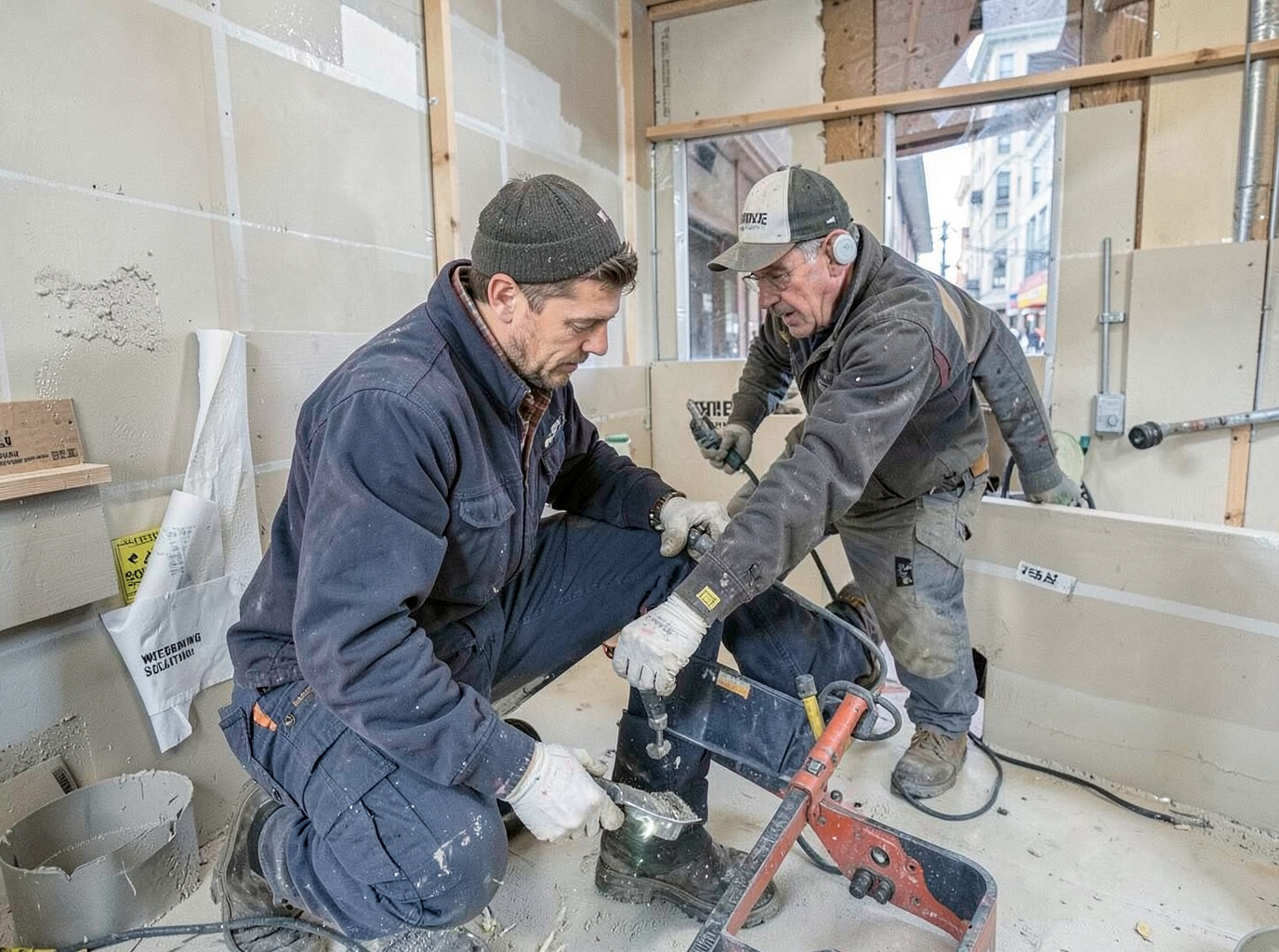
Interior waterproofing deals with water from the inside. Instead of digging around the foundation to keep water out, it collects the water that gets in and sends it where it can be removed. It is often the most practical choice for a finished basement, a tight lot or a house with limited access outside, and it works for crawl spaces as well. In Vancouver, where most of the year's roughly 42 inches of rain falls from late fall through winter, the soil can stay saturated for months and keep pushing water toward the foundation, so a dependable way to collect and remove it matters.
The parts of an interior system
- An interior drain: a channel or perforated pipe set at the footing, around the inside edge of the basement, that collects water where the wall meets the floor
- Wall drainage: a membrane or board on the wall that guides moisture running down the wall into the drain
- A sump pit and pump: receive the water from the drain and discharge it away from the house
- A discharge line routed to a suitable place
- Sealing: at cracks, joints and openings where water enters
- Dehumidification: to control the humidity that remains in a basement or crawl space
When interior waterproofing makes sense
- The basement is finished, or the exterior of the foundation is hard to reach
- Water enters at the floor-wall joint or through the floor
- Water appears after prolonged rain, when groundwater is high
- Excavating outside is impractical, for example on a compact lot
- You want to reduce moisture and still be able to use the space
What interior systems do not do
An interior system collects water that has already reached the foundation. It does not stop water from entering the wall, and it does not fix grading and gutters outside. Correcting surface drainage first reduces the load on an interior system and on the pump. If a wall is bowing or has horizontal cracks, that is a structural question that needs an engineer.
Signs you may need interior waterproofing
- Water along the base of basement walls or at the floor joint
- Dampness in the basement that returns after rain
- A musty smell and visible mold or mildew
- White mineral deposits on masonry
- Damp or staining on finished walls and flooring
- A pit or sump that fills regularly
Related services, guides and areas
- Works together with: sump pump installation, basement waterproofing, foundation waterproofing and exterior drainage systems
- Guides: signs of moisture problems after heavy rain, how to check crawl space humidity levels and soil, groundwater and drainage near the Columbia River
- Where we work: Hazel Dell, Orchards, Felida, Uptown Village and Downtown Vancouver
Not sure whether interior drainage is the right fix? Contact us and describe what you see.
Interior Waterproofing Solutions Services We Offer
✓Interior Drain Installation
A drain set at the footing along the inside of the foundation that collects water and sends it to a sump.
✓Wall Drainage Systems
A membrane or board on basement walls that guides seepage into the drain.
✓Sump Pit and Pump
A pit and pump that collects and removes the water, with an option for battery backup.
✓Crack and Joint Sealing
Sealing leaks at cracks and at the floor-wall joint.
✓Dehumidification and Moisture Control
Dehumidifiers and ventilation advice to control the humidity that remains after the water is managed.
Interior Waterproofing Solutions Cost in Vancouver, WA
| Service | Typical Range | What Affects It |
|---|---|---|
| Interior drain and sump | Call for an estimate | Depends on the length of the drain and the type of floor. |
| Wall drainage system | Call for an estimate | Depends on the wall area and finishes. |
| Crack and joint sealing | Call for an estimate | Depends on the number and length of cracks. |
| Dehumidifier and moisture control | Call for an estimate | Depends on the size of the space and the equipment. |
Ranges are typical for Vancouver, WA and confirmed with an exact written quote before any work starts.
How it works
- 1
Inspection
We inspect the basement or crawl space, any existing drains and pump, and where and when water appears.
- 2
Planning
We plan where the drain will run, where the pit goes and how the water will be discharged.
- 3
Installation
We open the floor or wall where needed, install the drain, pit and pump, and restore the work area.
- 4
Testing
We test that the drain collects water and the pump discharges it properly.
Pricing
Cost depends on the length of wall involved, floor type, finishes and the discharge route. We give an estimate once we have seen the space.